From Maine to D.C. and Beyond: Advancing Food as Medicine in Cancer Care
“When cancer enters your life, everything shifts at once. On day one, the focus becomes survival in every sense: staying healthy enough, holding onto your quality of life, and avoiding the crushing weight of financial strain.
Across the country, Food is Medicine (FIM) initiatives are expanding to address key drivers of chronic disease and outcomes, including nutrition, health status, and cost of care.
We’re at a turning point with cancer care. One where food programs are no longer just “a nice to have” support, but can be designed to integrate into medical care and save lives.
The good news? Donors and volunteers across Maine have positioned CBF to be a national leader in this very work.
Imagine every newly diagnosed Mainer accessing universal cancer nutrition services. A day of survival and fear met with nourishment and hope. I believe this is possible.“
Matt Dexter
CBF Executive Director
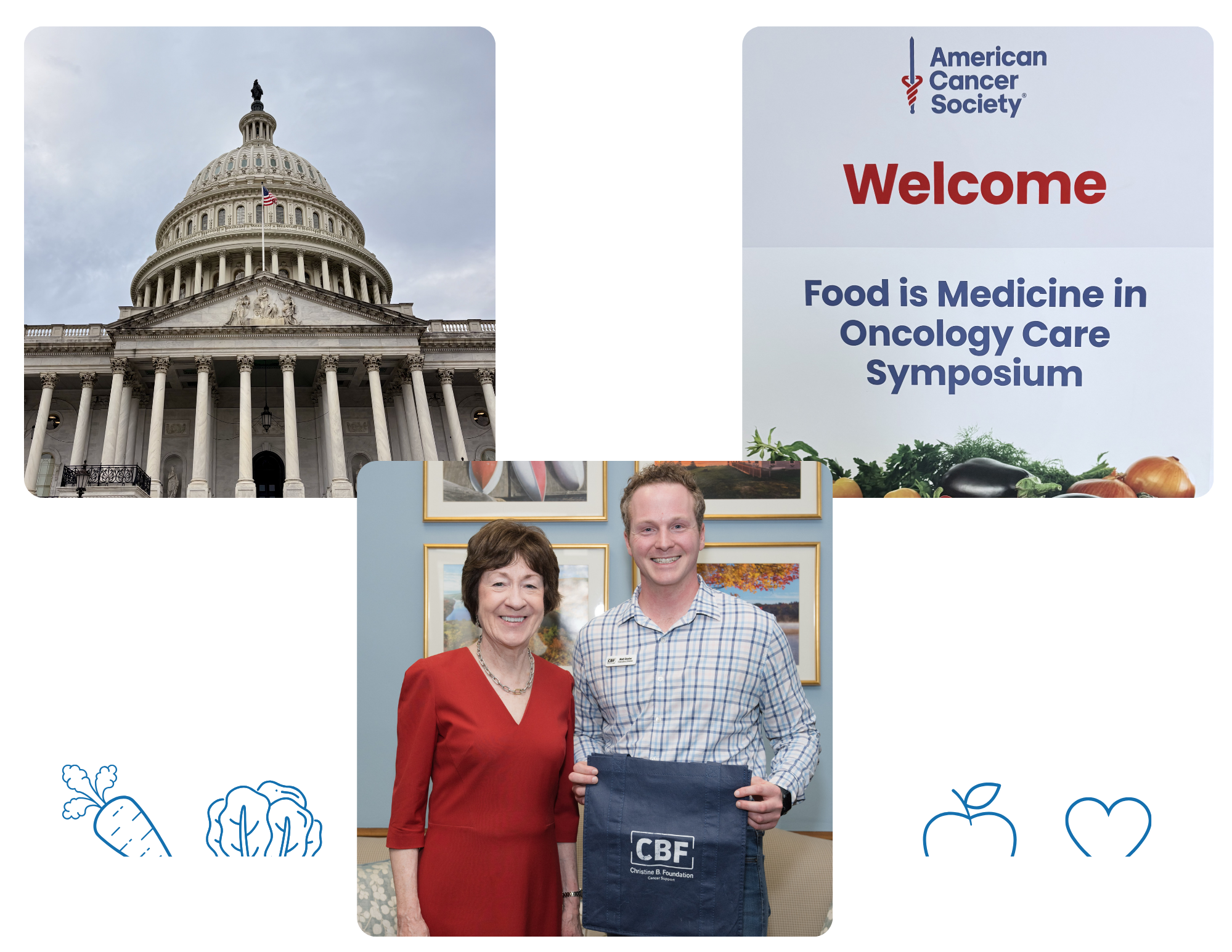
Last week, our Executive Director Matt Dexter traveled to Washington, D.C. for a series of meetings that reinforced something we see every day at home in Maine: food is not just support—it is healthcare.
The visit brought together conversations with members of Maine’s federal delegation, including Senators King and Collins, and with national leaders at the American Cancer Society Food is Medicine in Oncology Symposium. We were all centered on a shared goal—improving patient outcomes through access to medically tailored nutrition.
The trip showcased the Christine B. Foundation as a national model and clarified how federal policies will affect families in Maine communities.
What We Mean by “Food is Medicine”
At the heart of CBF’s mission and these conversations are a few key services, grounded in clinical evidence (Food as Medicine Coalition). Hunger vs. Health. Food Insecurity vs. Malnutrition. Here’s what we mean:
Medically Tailored Groceries/Meals
Either meals or groceries are delivered to individuals of all ages who live with severe, chronic, or complex illnesses and/or experience limitations in activities of daily living, as deemed necessary by a healthcare professional.
Registered Dietitian Nutritionist (RDN)
RDN tailors meal plans to meet the client's medical needs according to their health plan. Each is designed to improve health outcomes, lower the cost of care, and increase client satisfaction.
Within Cancer Care
For cancer patients, proper nutrition can mean fewer treatment interruptions, improved strength, and a better quality of life. Yet access remains inconsistent—and that’s where policy and partnerships become critical. CBF remains committed to advancing and improving this system.
Federal Policy: What It Means for Maine
Throughout conversations with the federal delegation and leaders at the symposium, several policy areas emerged as especially important for Maine:
National Institutes of Health (NIH): The Office of Nutrition Research's funding support for FIM research has almost doubled, funding over 20 projects in the last fiscal year, with only 2 being cancer-related. Ongoing research funding is essential to further validate and refine nutrition interventions in oncology. The full 2020-2030 Strategic Plan is found here.
MAHA (Make America Healthy Again) Initiatives: As national attention grows around prevention and chronic disease, the Centers for Medicare & Medicaid Services is implementing both policy and funding for FIM initiatives. Up to $100 million is being awarded to up to 30 projects through MAHA Elevate, a new funding opportunity to advance support for Medicare recipients with FIM initiatives that are not currently reimbursed.
Medicaid - Section 1115 Waivers: These waivers are among the most promising tools for states like Maine to pilot and expand coverage of nutrition-based interventions. In the last 5 years, over 40 states have used this approach to improve FIM work.
Sen. King, Rep. Pingree, and Rep. Golden expressed strong support for Maine’s Whole Person Waiver pending review with the Center for Medicare and Medicaid Services.
Medicare: Sen. Collins sponsored the Medical Nutrition Therapy Act, which would expand coverage for Registered Dietitian Counseling for cancer patients, currently not a reimbursable service.
Each of these levers has a direct impact on what we can offer patients—not just in theory, but in real, tangible ways.
Scaling the Impact: Today, Tomorrow, and What’s Possible
Today, CBF is delivering medically tailored nutrition services to cancer patients across Maine—meeting people where they are, often at the most vulnerable point in their lives.
Tomorrow, with the right policy alignment and funding pathways, we can expand our reach—serving more patients, integrating more deeply with healthcare systems, and ensuring no one faces treatment without nutritional support.
Our vision goes even further: a future where medically tailored nutrition is embedded in standard oncology care, covered by insurance, and accessible to every patient who needs it—regardless of geography or income.
Looking Ahead: CBF’s 2026 Focus
As we turn toward 2026, CBF is focused on three priorities:
Expanding Access: Reaching more patients across Maine in their communities and through hospitals, with produce, groceries, and dietitian-led support.
Driving Policy & Partnerships: Actively engaging in the State of Maine Food is Medicine Coalition and contributing to national efforts, including the American Cancer Society’s thematic working group.
Strengthening Sustainability: Building the infrastructure—financial and operational—to support long-term growth. This includes the completion of CBF’s Nourishing Hope Trial, in partnership with Yale University and Northern Light Health.
The Role of Our Community
None of this work happens in isolation. Our donors, volunteers, and supporters are not just part of the story; they are the reason it exists.
Donors make it possible to deliver immediate, life-changing support while we work toward systemic change. 100% of program costs are covered by this support.
Volunteers bring compassion and connection to every interaction, reminding patients they are not alone.
Patients and families continue to guide and inspire this work, ensuring it remains grounded in real needs and real impact.
A Shared Vision
Together, we are building a future where every patient has access to the nourishment they need to heal, recover, and live with dignity.
View our 2025 Annual Report to discover what we’ve achieved together.
Invest in this vision with a gift of time, treasure, or a planned gift.
Learn how, here, or reach out to matt@chrisbfund.org | (207) 573-9026